Living in Old Town Alexandria: Historic Homes, Waterfront Life and What Ownership Involves
 Daniel ParkNo. 162
Key takeaways
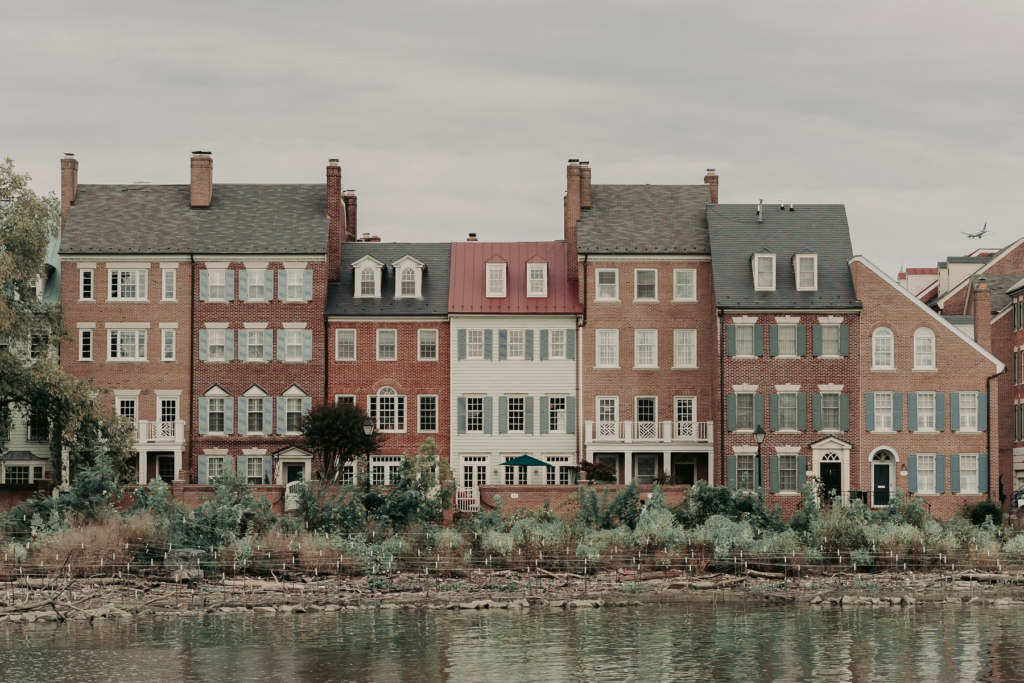
- Old Town is Alexandria’s historic core along the Potomac, with 18th and 19th century rowhouses, newer townhouses and condos, and two Metro stations at its edges.
- Most of it sits in the Old and Historic Alexandria District, established in 1946 as the third historic district in the country. Exterior changes visible from a public way need approval.
- Older homes bring character and real maintenance: brick and masonry work, old wiring and plumbing, shared walls, small lots and permit parking.
- Low-lying blocks near the waterfront flood often. The city recorded 227 flooding events at the Prince Street level from January to October 2025, and a revised flood mitigation plan was approved in June 2026.
- Alexandria’s FY 2027 real estate tax rate is $1.135 per $100 of assessed value, unchanged from the prior year.
Living in Old Town Alexandria means brick sidewalks, centuries-old rowhouses, a working waterfront and a walkable grid of shops and restaurants, with Metro, VRE and the Mount Vernon Trail all close by. Ownership also comes with historic district rules, older building systems, parking limits and, near the river, flood risk. If you want a short walk to almost everything and are comfortable with the upkeep of an older home, it is one of the most distinctive places to live in Northern Virginia.
Where Old Town is and how it connects
Old Town occupies the eastern part of the City of Alexandria, an independent city (not part of any county), along the Potomac River about six miles south of downtown DC. King Street runs west from the waterfront to the King Street-Old Town Metro station, and Braddock Road station serves the northern side. That makes it easy to reach Reagan National Airport, the Pentagon, National Landing and downtown without a car.
| Quick facts | Old Town Alexandria |
|---|---|
| Jurisdiction | City of Alexandria (independent city) |
| Real estate tax rate (FY 2027) | $1.135 per $100 of assessed value |
| Metro | King Street-Old Town and Braddock Road (Blue and Yellow lines) |
| Commuter rail | VRE and Amtrak at Alexandria Union Station near King Street |
| Trails | Mount Vernon Trail along the river |
| Historic district | Old and Historic Alexandria District, established 1946 |
| Typical housing | 18th and 19th century rowhouses, Victorian and Federal-style homes, newer townhouses, condos |
The tax rate above is the one the City Council kept in place when it adopted the FY 2027 budget on April 29, 2026, as reported by the Alexandria Times. The city also charges separate stormwater utility and residential refuse fees.
The homes
Old Town’s housing is unusually varied for a few square miles:
- Historic rowhouses and townhouses from the late 1700s and 1800s, many brick, some frame. Lots are narrow and deep, with small gardens or patios in back.
- Flounder houses, a local oddity: narrow homes with a tall, windowless side wall and a sloped roof, often added onto over the years.
- Victorian and Federal-style detached homes on the larger lots, fewer in number and highly sought after.
- Newer townhouses and condos, including converted warehouses and newer buildings near the waterfront and the Metro stations.
- Garden-style condos and co-ops around the edges of the district.
Condo buyers should review the association’s budget, reserves and rules carefully. My post on HOA and condo fee red flags covers what to look for.
What ownership in the historic district involves
According to the city’s historic districts guide, the Board of Architectural Review (BAR) must approve new construction and exterior alterations that are visible from a public street, alley, waterway or park. A permit to demolish is required to remove or cover more than 25 square feet of a historic structure, whether or not it is visible. Painting previously unpainted masonry also needs review, though ordinary paint colors are largely up to the owner.
- Plan for time. Window replacements, rooflines, additions and fences can require BAR review, which adds weeks or months.
- Materials matter. Expect to repair or match historic materials rather than substitute modern ones.
- Budget for specialists. Masonry repointing with the right mortar, slate or metal roofing and wood window restoration cost more than standard work.
- Check for easements. Some properties carry recorded preservation easements with their own approval rules. Your title search should reveal them.
Systems, structure and the inspection
Many Old Town homes have been updated several times. During inspection, look closely at:
- Electrical service and any remaining old wiring.
- Galvanized or cast iron plumbing and the sewer line to the street.
- Brick foundations, basements and crawlspaces for moisture.
- Shared party walls, chimneys and roof drainage with neighbors.
- Lead-based paint, which federal law requires sellers to disclose when known for homes built before 1978.
My guide to buying an older home has a fuller checklist.
Flooding near the waterfront
The blocks closest to the river, particularly around lower King, Union and Prince streets, see frequent tidal and storm flooding. The city counted 227 flooding events at the Prince Street level from January through October 2025, compared with a 20-year average of 145, according to reporting on a June 2026 Council briefing. After the National Park Service turned down a planned pump station, City Council on June 13, 2026 approved a revised waterfront flood mitigation approach built around an enhanced gravity storm sewer system and raised bulkheads, with design still underway.
For any home in the lower blocks, check FEMA and state flood maps, ask about past water and price flood insurance before you commit. My post on how to check flood risk walks through the steps.
Daily life: what’s nearby
- King Street shops and restaurants, with a free trolley that runs between the Metro station and the waterfront.
- Old Town Farmers Market at Market Square on Saturday mornings.
- Torpedo Factory Art Center on the waterfront, with working artist studios.
- Waterfront parks, a marina and seasonal water taxis on the Potomac.
- Annual events such as the George Washington Birthday Parade in February, the city’s birthday celebration in summer and holiday traditions including a boat parade of lights and the Scottish Walk Parade in December.
What this looks like in practice
Illustrative only, not a real client. A buyer compares a renovated 1880s brick rowhouse four blocks from King Street Metro with a newer townhouse a mile west. The rowhouse wins on walkability and charm, but it relies on permit street parking, its rear windows need BAR approval to replace, and the inspector flags repointing on the rear wall. The newer townhouse has a garage and modern systems but requires driving or a bus to reach the waterfront. Pricing the repointing, the window plan and insurance for each home turns a feeling into a fair comparison.
Common mistakes
- Assuming you can replace windows, doors or siding without approval.
- Skipping a sewer scope on an older home.
- Ignoring parking. Check residential permit rules for the block.
- Not pricing flood insurance in low-lying blocks.
- Planning a short-term rental without checking city rules; see short-term rental rules in Northern Virginia.
Daniel’s tip: Before you buy a historic home with renovation plans, call the city’s historic preservation staff with your address and a rough sketch. A quick conversation about what is likely to be approved can save you from overpaying for potential that isn’t there.
Thinking about Old Town? I can help you compare historic and newer homes and plan the right inspections.
Frequently asked questions
Is Old Town Alexandria in Fairfax County?
No. Alexandria is an independent city, so Old Town owners pay City of Alexandria real estate taxes, currently $1.135 per $100 of assessed value for FY 2027, and use city services.
Do I need permission to renovate a house in Old Town Alexandria?
For exterior changes visible from a public way, yes. The Board of Architectural Review must approve them, and demolition of more than 25 square feet needs a permit regardless of visibility. Interior work follows normal building permits.
Does Old Town Alexandria flood?
The lowest blocks near the waterfront flood frequently from tides and storms. Homes farther from the river face less risk, but check each address on flood maps and ask about history.
How do you get to DC from Old Town Alexandria?
Most residents use Metro from King Street-Old Town or Braddock Road, VRE for some commutes, the Mount Vernon Trail by bike, or the George Washington Memorial Parkway by car.
Filed under Inside Alexandria, Lifestyle & Community
Get new articles by email
A short monthly note on the Northern Virginia market, plus my newest articles. No spam, unsubscribe anytime.